
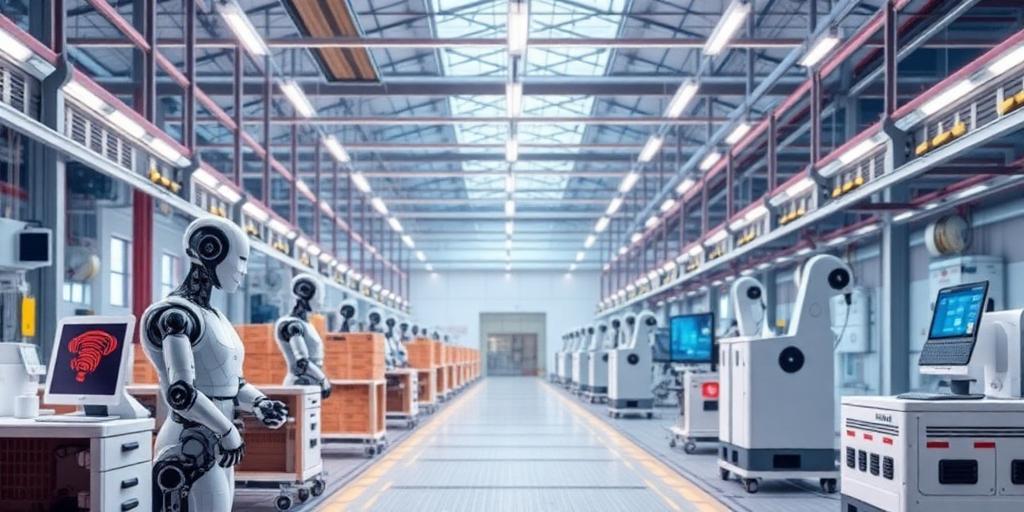
The Rise of AI in Indian Manufacturing: Efficiency Gains and Challenges Ahead
India's manufacturing sector is undergoing a significant transformation, driven by the integration of Artificial Intelligence (AI). This technological shift promises increased efficiency, reduced costs, and enhanced productivity. However, it also presents unique challenges that need careful consideration.
Efficiency Gains Through AI
AI is revolutionizing various aspects of manufacturing processes:
- Predictive Maintenance: AI algorithms can analyze data from sensors on equipment to predict potential failures, allowing for proactive maintenance and minimizing downtime.
- Quality Control: AI-powered vision systems can inspect products for defects with greater accuracy and speed than human inspectors, ensuring higher quality standards.
- Process Optimization: AI can analyze vast amounts of data to identify inefficiencies in production processes and recommend optimizations, leading to reduced waste and improved throughput.
- Supply Chain Management: AI can improve demand forecasting, optimize inventory levels, and streamline logistics, resulting in a more efficient and responsive supply chain.
Challenges in AI Adoption
Despite the potential benefits, the adoption of AI in Indian manufacturing faces several challenges:
- Infrastructure Limitations: Many Indian manufacturing facilities lack the necessary infrastructure, such as reliable internet connectivity and advanced computing resources, to support AI deployments.
- Data Availability and Quality: AI algorithms require large amounts of high-quality data to train effectively. Many manufacturers struggle with data silos, inconsistent data formats, and a lack of data governance.
- Skills Gap: There is a shortage of skilled professionals in India who can develop, deploy, and maintain AI systems in manufacturing environments.
- Cost of Implementation: The initial investment in AI hardware, software, and training can be significant, particularly for small and medium-sized enterprises (SMEs).
- Ethical Considerations: As AI becomes more prevalent in manufacturing, it is important to address ethical concerns related to job displacement, data privacy, and algorithmic bias.
Overcoming the Challenges
To successfully leverage AI in Indian manufacturing, it is crucial to address these challenges through a multi-pronged approach:
- Government Initiatives: The government can play a key role in promoting AI adoption by providing funding for research and development, offering tax incentives for AI investments, and establishing standards and regulations.
- Industry Collaboration: Collaboration between manufacturers, technology providers, and research institutions can help to accelerate the development and deployment of AI solutions.
- Skills Development Programs: Investing in education and training programs to develop a skilled workforce capable of working with AI technologies is essential.
- Focus on Data Quality: Manufacturers need to prioritize data collection, cleansing, and governance to ensure that AI algorithms have access to high-quality data.
- Gradual Implementation: A phased approach to AI implementation, starting with pilot projects and gradually scaling up, can help to minimize risk and maximize the chances of success.
Conclusion
AI has the potential to transform Indian manufacturing, driving significant efficiency gains and boosting competitiveness. However, realizing this potential requires addressing the challenges related to infrastructure, data, skills, cost, and ethics. By taking a proactive and collaborative approach, India can unlock the full benefits of AI and solidify its position as a global manufacturing hub.
Long-tail Keywords:
- AI implementation in Indian factories
- AI applications in manufacturing India
- Challenges of AI in Indian manufacturing sector
- AI and manufacturing efficiency in India
- Adopting AI in Indian manufacturing


